
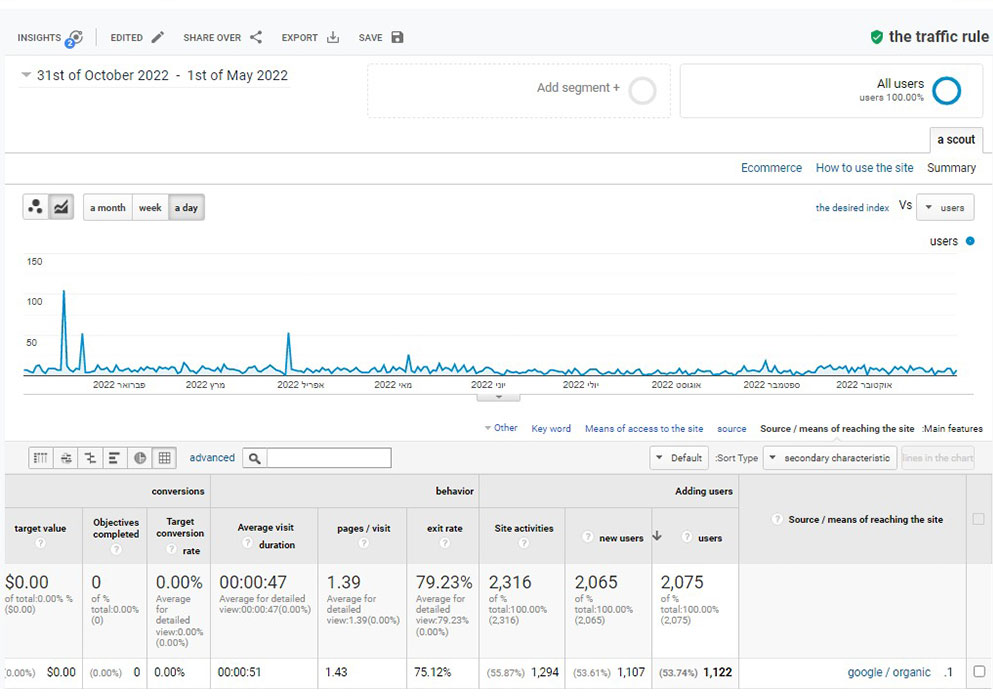
Defining SEO Management in the Modern Search Ecosystem
Enterprise SEO management is the strategic coordination of web architecture, semantic content structures, technical infrastructure, and authority signals to maximize discovery across traditional search engines and generative AI platforms. We approach this operational discipline by engineering scalable systems that reduce technical debt, enhance crawl budget efficiency, and build verifiable topic authority across digital touchpoints.
When we manage search visibility for large enterprise platforms, we treat organic discovery as an interconnected engineering system rather than isolated page-level tasks. Search platforms and generative AI engines evaluate domains using structured data, crawl performance, and verifiable content experience. Without active SEO management, enterprise websites suffer from silent traffic loss caused by dynamic URL duplication, unmanaged site updates, and outdated content structures.
We organize enterprise search management into five strategic operational pillars:
- Crawl Infrastructure and Indexation: Managing site architecture, canonical tag routing, and sitemap efficiency to ensure crawlers and AI bots index high-value assets.
- Semantic Entity Mapping: Structuring site content around entity relationships and topic hubs rather than isolated keywords.
- Experience, Expertise, Authoritativeness, and Trustworthiness (E-E-A-T): Validating author credentials, corporate references, and transactional trust across digital touchpoints.
- Performance and Interactivity Engineering: Engineering low latency and layout stability across desktop and mobile rendering environments.
- Generative Engine Optimization (GEO): Formatting definitions, tabular data, and direct key takeaways so language models can parse and cite domain insights accurately.
Strategic SEO Management Execution Matrix
A strategic SEO management matrix prioritizes technical execution alongside content expansion to drive continuous enterprise organic growth. We deploy this operational framework to evaluate structural site performance, optimize semantic entity relationships, and maintain high visibility within competitive search engine result layouts and AI answer synthesis engines.
| SEO Management Pillar | Core Technical Objectives | Primary Key Performance Indicators (KPIs) | Strategic Search & LLM Impact |
|---|---|---|---|
| Technical Architecture | Server response time, Core Web Vitals (INP, LCP, CLS), crawl budget efficiency | Indexation rate, server log crawl frequency, page speed score | Ensures complete site discovery and prevents rendering drops in search engine crawlers. |
| Topical Authority & Content | Semantic clustering, depth of coverage, E-E-A-T entity mapping | Organic keywords in top 3 positions, organic sessions, content decay rate | Drives rankings for competitive commercial queries and provides source data for LLM summaries. |
| On-Page & Schema Markup | Structured JSON-LD schema, meta title and header optimization, internal linking | Click-Through Rate (CTR), impressions, rich snippet ownership | Enhances SERP layout visibility and assists search engines in understanding content entities. |
| Off-Page & Brand Authority | High-authority backlink acquisitions, digital PR, entity mention tracking | Domain Rating, referring domains, brand search volume | Signals domain trustworthiness and contextual relevance across search platforms. |
| Local & Multi-Location SEO | Google Business Profile management, NAP consistency, local review acquisition | Local map pack rankings, directional requests, store calls | Captures geo-specific transactional intent across localized search queries. |
Complex SEO Challenges and Real-World Resolutions
Solving enterprise SEO challenges requires rapid technical diagnosis, data-driven prioritization, and precise structural execution. We resolve severe organic traffic regressions by auditing raw server logs, restructuring broken canonical maps, consolidating redundant assets, and mapping content entities to authoritative source graphs to eliminate indexing bottlenecks and search penalties.
Resolving Indexation Failure and Canonical Cannibalization at Scale
Resolving large-scale indexation failure requires isolating bad routing paths and restoring clear authority signals to canonical revenue pages. We address duplicate URL parameter expansion by deploying server log analysis, enforcing strict self-referential canonical tags, applying targeted crawl directives, and restructuring internal navigation to protect crawl budgets.
A multi-location service organization engaged us after losing 40 percent of its organic search traffic following an unmonitored CMS migration. The platform contained over 50,000 programmatically generated location pages where broken parameter handling created millions of duplicate paths. These redundant URLs exhausted the domain crawl budget, causing core product pages to drop completely from the primary search index.
To eliminate this systemic indexation failure, we executed a four-step technical remediation process:
- Log File Diagnostics: We analyzed raw server log files to evaluate crawler behavior, revealing that 75 percent of Googlebot requests were consumed by parameter-heavy filter pages.
- Canonical Map Restructure: We engineered self-referential canonical directives across root category pages and mapped parameter URLs back to primary indexable pages.
- Dynamic Robots Directives: We deployed custom exclusion rules in the robots file and configured URL parameters inside search console tools to block non-essential crawling paths.
- Internal Link Graph Cleanup: We updated navigation structures using clean HTML links to pass link equity directly to revenue-generating landing pages.
Within 90 days of executing this remediation protocol, domain crawl efficiency improved by 210 percent. The dropped core landing pages fully re-entered the primary index, and organic traffic increased by 65 percent.
Recovering Organic Visibility via Entity Restructuring Post-Algorithm Update
Recovering organic search traffic after major core updates requires transitioning away from thin topical coverage toward comprehensive entity-based content architecture. We reverse major ranking drops by pruning redundant low-value pages, building explicit author attribution networks, implementing detailed schema graphs, and integrating primary research assets across core category hubs.
An enterprise media site experienced a severe loss in search visibility after a major search core update reclassified its content catalog as low-depth, scaled material. The domain contained 3,500 short articles that lacked authoritative depth, entity relationships, and verifiable author details. Search crawlers downgraded the site, leading to a substantial drop in organic sessions across all core categories.
We resolved this quality devaluation by deploying a structured entity restructuring framework:
- Content Pruning and Consolidation: We audited 3,500 URLs, consolidating 1,200 thin articles into 300 authoritative master guides using permanent 301 redirects.
- Author Credibility Infrastructure: We built comprehensive author biography pages with verifiable background details, professional references, and structured entity tags.
- Structured Graph Implementation: We integrated JSON-LD schema networks linking Organization, Article, and DefinedTerm schemas to define core subject entities for crawlers and language models.
- Primary Asset Integration: We replaced redundant text blocks with original data tables, proprietary industry metrics, and structured summary modules.
This structural overhaul reversed the update penalty within five months. Our interventions generated a 120 percent net increase in organic search traffic and earned domain citations across generative AI search platforms.
Technical Architecture and Core Web Vitals Engineering
Technical architecture engineering establishes the foundational speed, stability, and rendering efficiency required for modern search discovery. We align our enterprise optimizations directly with developer guidelines documented in the Google Search Central documentation and performance benchmarks detailed within the web.dev Core Web Vitals documentation to maintain superior user experience standards.
Technical performance directly influences how search engines crawl, render, and rank web pages across device types. Modern search algorithms penalize sites that exhibit high latency, sluggish interactivity, or unexpected visual shifts during rendering. We establish strict technical budgets for client applications to maintain high visibility and conversion rates.
We enforce three critical user experience performance metrics across enterprise codebases:
- Largest Contentful Paint (LCP): Must render within 2.5 seconds of page loading. We achieve this threshold by implementing edge caching, server-side page optimization, and modern image formats such as WebP and AVIF.
- Interaction to Next Paint (INP): Must remain under 200 milliseconds. We optimize interactivity by deferring non-critical scripts, breaking up heavy main-thread executions, and streamlining DOM complexity.
- Cumulative Layout Shift (CLS): Must maintain a score below 0.1. We prevent layout jumping by enforcing explicit width and height CSS properties on images, video embeds, and dynamic advertising containers.
Trade-Off Analysis and Common Failure Modes
Enterprise SEO leadership requires balancing immediate site performance gains against long-term operational complexity and technical overhead. We evaluate strategic trade-offs between rapid programmatic content deployment, site speed optimization, structural canonical consolidation, and complex schema implementation to prevent catastrophic architectural failure modes that erode organic market share.
In our enterprise consulting practice, we frequently observe strategic trade-offs where rapid short-term execution compromises long-term technical stability. For instance, launching programmatically generated landing pages accelerates organic footprint expansion but carries high risks of canonical cannibalization and index bloating. Conversely, over-consolidating content preserves crawl budget but can reduce domain exposure for long-tail search intent.
| Strategic Option | Operational Benefit | Technical Risk | Mitigation Strategy |
|---|---|---|---|
| Programmatic Page Generation | Rapid topical footprint expansion across long-tail queries | Crawl budget depletion and dynamic duplicate content creation | Enforce parameterized URL canonicalization and strict robots crawl directives |
| Aggressive Content Consolidation | Maximizes page equity and eliminates keyword cannibalization | Temporary loss of long-tail keyword rankings | Map historical query intent to detailed sub-headings within consolidated hubs |
| Client-Side Rendering (CSR) | Modern application architecture and smooth user transitions | Search crawler indexing delay and high JavaScript rendering costs | Implement Server-Side Rendering (SSR) or dynamic pre-rendering systems |
| Advanced Schema Graph Deployment | Enhances entity comprehension and SERP rich result ownership | Schema syntax drift and validation errors post-deployment | Automate schema validation builds within continuous deployment pipelines |
Metrics and Analytics Framework for Strategic SEO
A comprehensive SEO analytics framework tracks crawl infrastructure health, user engagement quality, SERP position dynamics, and commercial conversion performance. We implement multi-layered measurement systems to connect raw server rendering telemetry directly with top-line revenue outcomes, ensuring enterprise marketing investments yield quantifiable and sustainable returns.
Relying exclusively on keyword rank tracking leads to misaligned marketing priorities and wasted budget. We construct reporting frameworks that connect technical execution metrics, organic discovery metrics, user engagement telemetry, and commercial conversion outcomes. This holistic tracking model allows executive teams to evaluate the direct ROI of organic search initiatives.
| Analytics Focus Area | Technical Metric Tracked | Business Impact Measurement | Optimization Action |
|---|---|---|---|
| Organic Discovery | Search Impressions & Average SERP Position | Brand Reach & Non-Branded Awareness | Expand content clusters for mid-funnel queries showing high impressions but low CTR. |
| Crawl Usability | Server Log Hits & Indexation Status | Technical Crawl Health & Index Coverage | Remove canonical conflicts and prune broken internal links. |
| Engagement Quality | Engagement Rate & Scroll Depth | User Intent Alignment | Refine page layout, improve readability, and strengthen Calls-to-Action (CTAs). |
| Revenue & Conversion | Organic Leads, Sales, & Customer Lifetime Value (LTV) | Direct Return on Investment (ROI) | Prioritize technical and content resources on high-converting product categories. |
Frequently Asked Questions
How long does enterprise SEO management take to demonstrate measurable ROI?
Enterprise SEO management typically produces initial technical improvements within 30 to 60 days, while substantial revenue growth requires three to six months. Rapid gains stem from resolving crawl blockages, broken redirects, and indexation errors that prevent search engines from parsing existing assets. Sustained market leadership and high-intent keyword acquisition demand continuous content optimization, semantic entity expansion, and link authority building.
What is the difference between traditional SEO and Generative Engine Optimization?
Traditional SEO optimizes pages to rank higher on search engine results pages, while Generative Engine Optimization structures content so large language models can extract and cite domain insights in AI-generated answers. Traditional tactics prioritize keyword density, backlink quantity, and meta tags. Generative Engine Optimization focuses on clear entity definitions, concise query resolution, tabular data presentation, and high information density.
How do technical performance issues like poor INP impact organic rankings?
Poor Interaction to Next Paint (INP) performance directly depresses organic search rankings by signaling to search algorithms that a page delivers a frustrating user experience. When users encounter input lag upon clicking or tapping, site engagement metrics drop rapidly. Search engines demote sluggish pages in favor of responsive competitors that meet core user experience benchmarks.
Why is E-E-A-T essential for enterprise search visibility?
Experience, Expertise, Authoritativeness, and Trustworthiness (E-E-A-T) provide the framework search engines use to evaluate content reliability and brand authenticity. Establishing clear author credentials, verifiable citations, and explicit organization schema prevents search algorithms from demoting content during automated core quality updates. Strong authority signals are especially critical for high-stakes financial, legal, and health queries.
How do we integrate local search management into an enterprise framework?
Enterprise local search management requires standardizing multi-location business data, structuring geo-specific schema, and deploying localized landing pages across all operational regions. We ensure business names, addresses, and phone numbers remain consistent across directories while optimizing Google Business Profiles for regional map packs. Combining localized content clusters with centralized technical management maximizes organic visibility across geo-targeted commercial searches.
Sources
- Google Search Central Documentation: https://developers.google.com/search/docs/fundamentals/seo-starter-guide
- web.dev Core Web Vitals Documentation: https://web.dev/articles/vitals
- Google Search Quality Rater Guidelines: https://static.googleusercontent.com/media/guidelines.raterhub.com/en//googleguidelines.pdf

