Press Release SEO Strategy: Turn Corporate News Into High-Ranking Brand Authority
BlogPress Release SEO Strategy: Turn Corporate News Into High-Ranking Brand Authority and Generative AI Visibility At Sitelinx SEO Agency, we transform corporate announcements into powerful search visibility drivers that secure top organic rankings, reinforce entity authority, and generate predictable business leads. Modern distribution has moved far beyond spamming low-tier news directories with exact-match anchor links for temporary keyword bumps. Today, publishing structured, high-value corporate releases allows brands to earn authentic media coverage, dominate local search results, establish organizational trust, and secure primary citations across Google AI Overviews and generative answer engines. Modern Mechanics of Press Release SEO and AI Discovery Many enterprise marketing teams still assume corporate news releases belong strictly to legacy public relations workflows. Advances in search engine processing, natural language understanding, and artificial intelligence retrieval have fundamentally changed that dynamic. Distributing keyword-stuffed anchor links across low-quality syndication networks no longer passes link equity directly to target root domains. Search engines enforce strict outbound link qualifications for syndicated press materials. According to official Google Search Central link qualification guidelines, outbound links published within press releases must include rel="nofollow" or rel="sponsored" attributes. Attempting to bypass these requirements with standard dofollow links creates unnatural backlink profiles that expose websites to algorithmic filter suppression or manual spam penalties. The true utility of news distribution has shifted from direct link juice pass-through toward entity validation, rapid search bot indexing, brand co-occurrence, and generative AI search grounding. High-authority wire networks deliver verified factual data directly into search engine index repositories and Large Language Model (LLM) training pipelines. Wire networks broadcast machine-readable corporate data directly to primary search crawlers within seconds of publication. Search algorithms parse press materials to verify organizational attributes, executive leadership entities, and physical geographic locations. Artificial intelligence models use structured corporate press releases as trustworthy grounding data during Retrieval-Augmented Generation (RAG) tasks. Core SEO and AI Value Drivers of Corporate Releases Executing a disciplined news strategy accomplishes multiple search engine optimization and generative search objectives concurrently. We structure every corporate announcement to feed specific technical search spiders, vector search indexes, and human journalists. Entity Establishment and Knowledge Graph Mapping Search engines rely on structured entity data to map what an organization does, where it operates, and which vertical markets it serves. Distributing authoritative releases across major news wires provides precise factual assertions that algorithms use to build and strengthen Knowledge Graph entries. Clear entity declarations connect corporate brand names to primary service classifications, operational addresses, and executive teams. Strong entity mapping allows search systems to associate a business with high-intent commercial and transactional queries. Structured organization attributes eliminate semantic ambiguity between similar corporate brand names across global search indexes. Crawl Frequency and Rapid Indexation Tier-one wire services maintain elevated crawl priority status with search engine spiders. Inserting targeted target links to new product landing pages, original research assets, or updated documentation creates immediate discovery corridors for search crawlers. Search spiders discover and process new target landing pages within minutes when linked from high-frequency wire feeds. Rapid indexation eliminates discovery lag for time-sensitive product rollouts, financial updates, or strategic campaign launches. Accelerated crawling provides a measurable advantage over relying solely on standard XML sitemap ping requests. Unlinked Brand Citations and Topical Co-Occurrence Modern search algorithms evaluate unlinked brand mentions appearing adjacent to relevant industry terms across respected news platforms. This semantic relationship building is recognized as topical co-occurrence. Persistent co-occurrence between a corporate brand name and primary industry terminology trains search models to recognize domain expertise. Machine learning algorithms use semantic association to grade brand prominence without relying exclusively on hyperlink connections. Increased co-occurrence strengthens topical authority scores across the entire target root domain. Secondary Media Acquisition and Editorial Backlinks Journalists, industry researchers, and trade bloggers continuously monitor syndication wires to source original data and breaking stories. When a release contains proprietary industry metrics, custom survey data, or authoritative leadership commentary, media outlets cover the story natively. Native editorial coverage generates genuine follow backlinks from authoritative industry journals and tier-one news sites. Earned editorial links transfer full ranking equity, driving sustainable domain authority growth that syndicated links cannot directly supply. High-trust press mentions establish high-converting referral channels that direct targeted prospective buyers to your site. Generative AI Search Training Data and RAG Retrieval Generative engines such as Google AI Overviews, ChatGPT, and Perplexity parse indexed news streams to synthesize conversational responses. Well-structured press announcements offer clean, unambiguous text blocks for these generative answer frameworks. Presenting structured claims, verifiable metrics, and unambiguous brand details ensures answer engines digest corporate facts accurately. Clear source attribution increases the frequency of brand citations inside conversational AI answer engines. Continuous news distribution ensures Large Language Models ingest updated corporate positioning during ongoing training and retrieval updates. Real-World Case Studies: Resolving Complex PR and Search Challenges To demonstrate how strategic news distribution performs in technical environments, we highlight two enterprise client scenarios where traditional outreach fell short and our engineered PR approach delivered measurable organic recovery and growth. Enterprise Software Algorithmic Penalty Recovery and PR Pivot A national enterprise software firm engaged our team after suffering a severe organic visibility drop caused by an algorithmic link penalty. Their former marketing vendor had distributed monthly releases filled with exact-match commercial anchor text links pointing directly to core transactional software pages. We executed a comprehensive link remediation and PR optimization campaign: Link Audit and Cleanup: We audited more than 4,000 syndicated backlink placements, submitted a detailed disavow file, and worked with distribution partners to update historical outbound links with rel="nofollow" attributes. Content Model Pivot: We redirected their press calendar away from self-promotional product launches toward a data-driven industry research portal, publishing original quarterly cybersecurity benchmark reports. Hybrid Media Distribution: We distributed structured releases over premium wire circuits while pitching raw underlying dataset files directly to technology journal editors. Within 120 days, search engines re-evaluated the domain profile and fully removed the algorithmic penalty. The program earned 18 organic editorial features from leading enterprise technology publications, resulting in a 68 percent increase in organic domain authority metrics and a

Architecting High-Ranking SEO Blogs For Organic Traffic And AI Summaries
BlogArchitecting High-Ranking SEO Blogs for Organic Traffic and AI Summaries An SEO-friendly blog must deliver high information gain, clean technical code, and explicit entity markup to secure top ranking positions on Google and earn citations across generative AI systems. Achieving sustainable organic growth requires aligning site architecture with official Google Search Essentials, optimizing for Core Web Vitals performance, and constructing structured content hubs. At Sitelinx SEO Agency, we help service providers and growing brands turn low-performing publications into high-yield search assets. You can reach our engineering team directly at (213) 510-8355 to review your current site architecture and technical setup. Strategic Content Engineering for Modern Search and Generative AI Search engines no longer rely on simple word frequency or repetitive phrasing to evaluate web content. Search platforms process text through vector embeddings, natural language processing, and strict E-E-A-T frameworks (Experience, Expertise, Authoritativeness, and Trustworthiness). Your articles must resolve user intent immediately while providing unique factual data that automated systems can extract and cite. Content that merely rephrases existing web pages fails to earn high information gain scores during algorithm evaluations. We managed a technical overhaul for an enterprise client that experienced a 42 percent organic traffic drop following a major search algorithm update. Our audit uncovered 1,200 published posts plagued by internal keyword cannibalization and low factual density. We consolidated thin overlapping articles into centralized authority hubs and mapped explicit entity attributes across every URL. Within five months, total search impressions increased by 118 percent, and the publication secured direct citations in leading generative search summaries. Core Content Requirements for Generative and Vector Search Information Gain Value: Original data sets, direct industry experience, proprietary quotes, and factual case studies that do not exist elsewhere online. Entity Identification: Explicit statements defining primary entities, secondary properties, and standardized technical terminology for machine parsers. Scannable Subheading Hierarchy: Logical section headings using H2 and H3 tags that allow both readers and automated crawlers to navigate specific topical blocks. Data Structuring: Standardized comparison tables, organized bullet points, and defined key metrics that simplify answer extraction for automated search overviews. Technical Infrastructure and Platform Architecture The foundational technology of your website controls crawling efficiency, server response speed, and indexation stability. Choosing the right Content Management System (CMS) requires balancing ease of editing against custom code optimization. Search crawlers prioritize lightweight code structures, fast server delivery, and total control over canonical tags and meta directives. You can review baseline publishing standards inside the official Google Search Central SEO Starter Guide. CMS Platform Technical Control Schema Customization Core Web Vitals Capabilities Annual Maintenance Range Primary Use Case WordPress (Self-Hosted) High Unlimited Custom Code High (with asset optimization) 300 to 1,500 USD Scalable blogs, media networks, regional service providers Next.js / Headless Maximum Developer Custom Built Maximum (native performance) 2,000 to 8,000 USD High-traffic enterprise applications and custom software hubs Webflow Moderate Native and Custom Embeds High (managed servers) 200 to 600 USD Visual-first corporate sites and mid-sized content hubs Squarespace / Wix Low Template Standard Options Moderate (platform locked) 150 to 400 USD Small local sites and basic service portfolios Real-World Performance Fixes: Passing Core Web Vitals We led a performance overhaul for a high-traffic WordPress blog that suffered from severe loading latency. The site recorded Largest Contentful Paint (LCP) times of 4.8 seconds and Cumulative Layout Shift (CLS) scores of 0.35. The performance bottlenecks stemmed from heavy plugin reliance, unoptimized media rendering, and dynamic database queries executing on every visitor request. These issues severely damaged the site’s overall SEO performance and user retention rates. We eliminated non-essential JavaScript libraries, deployed server-side Redis object caching, and converted static media into modern WebP formats with fixed height and width attributes. We also integrated custom utilities like the Accessibility Lite plugin to ensure compliance without adding script bloat. Following these technical changes, LCP dropped to 1.2 seconds, Interaction to Next Paint (INP) improved to 110 milliseconds, and CLS fell to 0.01. These improvements achieved passing marks across all Core Web Vitals metrics, resulting in a 27 percent increase in Google crawling frequency. Keyword Engineering and Semantic Topic Clustering Keyword strategy has shifted from targeting individual search terms to mapping entire semantic clusters and user journey stages. Modern search engines index content by grouping terms into overarching entity trees and search intent profiles. Establishing sustainable topical authority requires covering every aspect of a core subject area. This multi-layered approach ensures your blog captures top funnel informational research alongside high-intent commercial queries. Search Intent Category Real-World Search Query Example Recommended Content Format Primary Target Conversion Primary Success Metric Informational What is technical schema markup Comprehensive Pillar Article Newsletter Signup / PDF Guide Pageviews and Engagement Time Commercial Research Best technical SEO agencies in Los Angeles Detailed Matrix and Comparison Guide Consultation Request / Audit Booking Lead Form Submissions Transactional Hire organic SEO agency for blog audit Service Page with Integrated Case Studies Direct Phone Call / Proposal Request Sales Conversion Rate Navigational Sitelinx SEO Agency publishing standards Central Resource Hub Document Internal Navigation / Resource Use Direct Navigation Accuracy Intent Classification and Programmatic Topic Modeling Define Primary Root Entities: Establish core subjects that reflect your primary business offerings and service capabilities. Build Subtopic Clusters: Map supporting questions, long-tail variations, and industry terms around each primary entity. Match Search Intent: Align post formats with user expectations, providing concise direct answers rather than broad generic overviews. Establish Strategic Interlinking: Connect supporting cluster articles to parent pillar pages using descriptive, context-rich anchor text. On-Page Optimization and Structured Data Strategy On-page execution connects keyword architecture with visual content layout. Every published article must follow a strict heading order that leads readers and crawlers logically through the topic. Subheadings must maintain a proper structural order without skipping heading levels. Introductory paragraphs below subheadings should state clear facts before expanding into detailed analysis. To verify standard semantic markup properties, consult the official Schema.org BlogPosting Specification and the broader database on the Wikipedia Search Engine Optimization Entry. Entity Disambiguation for Expert Authority Signals An enterprise client approached us

Uncovering Google Analytics Goals Limitations: What You Need To Know
BlogUncovering Google Analytics Goals Limitations: What You Need To Know About GA4 Key Events and Tracking Gaps The Fundamental Shift: From Universal Analytics Goals to GA4 Key Events Digital measurement underwent a tectonic shift when Universal Analytics was decommissioned in favor of Google Analytics 4 (GA4). In Universal Analytics, tracking success centered around session-based goals. In GA4, Google re-engineered the platform architecture around an event-based model and subsequently renamed conversion actions to key events to align with Google Ads terminology. While this event-based architecture provides flexible custom event schemas, relying exclusively on standard Google Analytics key event tracking creates critical data blind spots for modern businesses. Native web analytics tools operate primarily within client-side browser environments, which are increasingly restricted by browser privacy controls, cookie deprecation, cross-device fragmentation, and offline disconnects. At Sitelinx Organic SEO Agency, we frequently audit analytics setups for businesses that assume their dashboards capture 100% of customer journeys. In practice, standard Google Analytics setups often miss 15% to 40% of conversion activity due to browser security restrictions, ad blockers, and unrecorded offline interactions. Understanding these technical limitations is necessary to build an accurate attribution engine and protect marketing return on investment. Core Limitations of Google Analytics Conversion Tracking 1. The Offline Conversion Gap and Real-World Blind Spots Google Analytics is engineered to monitor interactions that occur within a browser or native mobile application window. When a user journey moves offline, standard key events lose visibility. Offline interactions that standard analytics fails to measure include: Inbound phone calls initiated after a user browses a web landing page. In-person consultations or retail sales generated by organic search traffic. B2B deal closings occurring weeks or months after an initial form submission within a customer relationship management (CRM) pipeline. Direct messaging sales finalized on third-party channels such as SMS, WhatsApp, or Instagram. Complex Issue Resolution Example: B2B Service Provider Attribution We managed an account for a regional service provider where web dashboards showed a stagnant 1.2% conversion rate, despite sales revenue increasing substantially month-over-month. The disconnect stemmed from their sales process: 65% of qualified leads browsed service pages and then called the main office directly rather than filling out an online form. To resolve this issue, we deployed dynamic number insertion (DNI) linked to a custom call-tracking platform. We captured the user’s first-party client ID (cid) and session parameters, passed them into the call management software, and pushed completed call events back into GA4 via the Measurement Protocol. Once offline calls were linked to session data, campaign conversion rates rose to 3.8%, revealing that organic location pages were driving the vast majority of high-ticket deals. 2. Cross-Device Fragmentation and Browser Cookie Limits The modern conversion journey is non-linear. Users routinely discover products on a mobile device during morning commutes, research features on a desktop workstation at lunch, and complete purchases via tablet during the evening. Google Analytics attempts to stitch these sessions together using client IDs stored in first-party cookies. However, strict privacy controls impose hard limits on client-side identification: Apple Safari’s Intelligent Tracking Prevention (ITP) caps JavaScript-created first-party cookie lifespans to seven days, or 24 hours if incoming traffic contains URL tracking parameters. Mozilla Firefox’s Enhanced Tracking Protection actively blocks known tracking scripts from executing on the client side. Users who browse across multiple devices without signing into a unified site account appear as distinct users, inflating overall user counts while fragmenting channel attribution. When returning visitors visit a site past the seven-day cookie window, browser engines reset their tracking identifier. Google Analytics treats them as brand-new visitors, artificially shortening recorded sales cycles and misattributing conversion credit to direct or branded search channels instead of original organic discovery channels. Technical details on web browser storage policies can be reviewed via the W3C Tracking Protection Standards. 3. Data Thresholding, Data Sampling, and Privacy Restrictions To comply with global privacy regulations such as GDPR and CCPA, Google Analytics enforces automated data protection measures that directly impact reporting granularity: Data Thresholding: When reports or Explorations contain small user sample sizes, GA4 withholds rows from display to prevent individual user re-identification. This frequently occurs when Google Signals is enabled, causing low-volume long-tail search keywords or local campaign data to disappear entirely from report views. Exploration Data Sampling: While standard out-of-the-box reports use unsampled data, advanced Explorations (funnel, path, and user explorer reports) apply heavy data sampling when queries exceed 10 million events. This introduces mathematical estimation into reporting. Shortened Data Retention: By default, event-level data retention in GA4 Explorations is set to 2 months and can only be extended to a maximum of 14 months for standard properties. Year-over-year cohort analysis beyond 14 months is impossible directly within the user interface. 4. Dark Social Traffic and Direct Referral Misclassification Dark social refers to private user-to-user link sharing that occurs through untracked communication channels. When a user copies a website link and shares it through an encrypted messaging application, email client, or private channel, the recipient’s browser strips the originating HTTP referrer header. Google Analytics processes these sessions as Direct traffic. This creates a systematic reporting error: Blog content and high-intent resource pages appear to drive large volumes of unearned direct traffic. The original organic search, social post, or newsletter campaign that generated the initial share receives zero credit for secondary web visits. Strategic decisions risk defunding high-performing top-of-funnel content due to inaccurate source attribution. Comparing Client-Side GA4 Tracking vs Advanced Measurement Frameworks To mitigate client-side analytics gaps, organizations must combine web analytics with server-side processing and CRM integration. The table below outlines how native client-side GA4 compares against advanced tracking architectures. Evaluation Metric Native Client-Side GA4 Server-Side GTM (sGTM) Closed-Loop CRM Pipeline Primary Data Source Web browser JavaScript Cloud server proxy First-party database / CRM Ad-Blocker Immunity Low (frequently blocked) High (first-party domain routing) Absolute (server-stored records) Cookie Lifespan 1 to 7 days (subject to ITP) Up to 2 years (HTTP-only set) Indefinite Offline Transaction Capture None Partial (via API webhooks) Complete Data Thresholding Risk High (UI enforced) None (in raw server

Expert Medical SEO Services: Boost Your Practice’s Online Visibility
BlogSEO Services For The Medical Niche: Because “If You Build It, They Will Come” Only Works In Movies Let’s get real for a second. You’ve got a killer medical practice—top-notch care, glowing patient reviews, and a team that could give Gray’s Anatomy a run for its money. But here’s the thing: If your website is buried on page 47 of Google, you might as well be running a lemonade stand in the Sahara. Cue the tumbleweed sound effect. Yeah, I know. You’ve heard the whole “build it and they will come” spiel. Spoiler alert: That works great in movies where Kevin Costner chats with cornfields. In the real world? Not so much. If you want patients to find you, you need SEO. Not just any SEO, though—medical SEO. And that’s where [Your Business Name] comes in. Let’s break down why this niche is its own beast and how we can help you tame it. Why Medical SEO Isn’t Just “SEO With A Stethoscope” Imagine trying to perform open-heart surgery with a butter knife. That’s what happens when you apply generic SEO tactics to the medical field. medical SEO is hyper-specific, regulated, and competitive. Here’s why: Trust is everything. Patients aren’t Googling “best pizza near me.” They’re searching for answers to deeply personal health concerns. Your site needs to scream authority without sounding like a robot reciting WebMD. Regulations galore. HIPAA compliance, ADA accessibility, YMYL (Your Money or Your Life) content guidelines—miss one, and Google slaps your site harder than a toddler denied candy. Keywords are… complicated. Ever tried explaining HIPAA compliance to someone who thinks it’s just another acronym? Now imagine optimizing for terms like “non-invasive cardiac ablation” while keeping content readable. At [Your Business Name], we’ve spent years decoding this chaos. We don’t just throw keywords at a wall and hope they stick. We build strategies that balance technical precision with human empathy. Because let’s face it: If your SEO vendor thinks “PPC” stands for “Puppies Playing Chess,” you’re in trouble. “But My Website Looks Fine!” – Common Mistakes Medical Practices Make I get it. You’re proud of your site. The hero image has a smiling doctor! The “About Us” page mentions your 5-star ratings! But here’s the cold, hard truth: A pretty website without SEO is like a Ferrari with no engine. Looks fast, but it’s going nowhere. Here’s where most medical practices trip up: Ignoring Local SEO 46% of Google searches are local. If your site isn’t optimized for “dentist near me” or “pediatrician in [City],” you’re missing out on half your potential patients. Pro tip: Claim your Google Business Profile. Seriously. It’s free, and it’s the #1 way to pop up in local searches. Writing For Robots, Not Humans Stuffing your blog with phrases like “best healthcare provider in [City]” 27 times? Google’s smarter than that. So are patients. Fix it: Create content that answers real questions. “How to prepare for knee surgery” > “Premium orthopedic solutions.” Forgetting Mobile Users 60% of health-related searches happen on mobile. If your site takes 10 seconds to load or looks like a Picasso painting on iPhone, patients will bounce faster than a defibrillator jolt. At [Your Business Name], we audit these issues (and more) for free. Because nothing says “friendly” like pointing out your website’s flaws, right? (Kidding. We’re nice about it.) Why You Need a Medical SEO Specialist (And No, Your Nephew’s Friend Doesn’t Count) Look, I’m sure Timmy’s TikTok fame is impressive. But medical SEO requires expertise in: Ethical link-building: No, buying backlinks from “Dr. Oz Fanpage 2009” won’t cut it. HIPAA-compliant content: One accidental privacy violation, and you’re in legal hot water. Patient-first keyword strategies: Balancing search volume with intent. (FYI: “flu symptoms” ≠ “flu vaccine near me.”) [Your Business Name] lives in this space. We’ve helped clinics rank for “IV therapy” in Miami, dermatologists dominate “acne treatments” in Austin, and even made a chiropractor trend for “lower back pain relief” in Denver. How? By treating SEO like medicine—tailored, data-driven, and constantly evolving. “How Do I Even Start?” – 3 Steps to Kickstart Your Medical SEO Audit Your Site Use tools like Screaming Frog or SEMrush to find technical issues. Or, ya know, let us do it for you. Publish Helpful Content Blog posts, FAQs, patient guides—anything that answers questions before someone calls you. Track, Tweak, Repeat SEO isn’t a “set it and forget it” crockpot recipe. It’s more like sourdough: needs constant attention. FAQs: Because Googling “Medical SEO” Feels Ironic Q: How long until I see results? A: SEO’s a marathon, not a sprint. Most clients see traction in 3–6 months. But hey, good things come to those who wait (and optimize). Q: Can’t I just run Google Ads instead? A: Sure! But ads stop working the second you stop paying. SEO builds long-term traffic. Think of it as investing vs. renting. Q: What makes [Your Business Name] different? A: We only work with medical practices. No shady tactics, no jargon—just results that stick. Plus, we’ve got a 98% client retention rate. (Not to brag, but… okay, we’re bragging a little.) Ready to Ditch the Cornfield Strategy? Let’s wrap this up with a metaphor even Kevin Costner would approve of: Your website is the field. SEO is the lightning that makes the ghosts… er, patients… appear. But you don’t need magic. You need a partner who gets it. [Your Business Name] isn’t just another SEO agency. We’re your hype squad, your nerdy tech team, and your compliance watchdog—all rolled into one. No fluff, no empty promises. Just strategies that turn your site into a patient magnet. So, what’s next? Click that contact button, shoot us a message, and let’s chat. Because unlike in the movies, you can skip the part where you wait around for a voice in the corn. 😉
Essential SEO Services for Every Business: Why You Can’t Afford to Ignore It
BlogWho Actually Needs SEO? (Spoiler: It’s Not Just Tech Bros) Let’s get real—SEO isn’t just for Silicon Valley startups or faceless corporations. In fact, if you’re reading this and thinking, “Eh, SEO’s not for me,” you’re probably exactly the person who needs it. We’ve seen it all: the bakery down the street, the freelance graphic designer, even the dog groomer with a “vibey” Instagram but zero website traffic. Spoiler: They all benefit from SEO. And no, you don’t need a crypto budget or a team of coders. Let’s break it down. (Full disclosure: We’re Sitelinx Organic SEO Agency, a Los Angeles-based crew that’s been geeking out over SEO since dial-up was cool. We’ll mention ourselves a few times here—not to be obnoxious, but because we genuinely love helping businesses like yours.) “But I’m Just a Small Business—Do I Really Need SEO?” Short answer? Yes. Long answer? Hell yes. Let’s squash the myth that SEO is only for Fortune 500 companies. Small businesses might benefit the most from SEO because: Local SEO puts you on the map (literally). When someone Googles “best coffee shop near me,” you want to pop up—not your rival across town. Budgets are tight. Unlike paid ads, SEO builds organic traction over time. Think of it as a marathon, not a sprint. (Or, if you’re like us, a Netflix binge—slow but addictive.) Google Business reviews can make or break you. SEO helps you manage your online rep without begging Aunt Karen for 5 stars. When Should You Hire an SEO Company? Your website’s traffic looks like a ghost town. Your competitors are ranking higher for the same keywords. You’ve tried DIY SEO and ended up down a 3 a.m. Reddit rabbit hole. (Shameless plug: We’re one of the best SEO companies for small business because we speak human, not jargon. Need help? We’re in L.A., but we work with businesses everywhere.) “I Have a WordPress Site—Am I Safe?” WordPress is like a Swiss Army knife: powerful, but only if you know how to use it. WordPress SEO services aren’t optional—they’re essential. Why? Plugins like Yoast are great, but they won’t fix technical SEO issues like slow load times or broken links. Default themes often have clunky code that Google hates. Without proper optimization, your blog could be shouting into the void. DIY vs. Hiring an SEO Specialist We get it—you’re busy running a business, not obsessing over meta tags. Here’s when to call in the pros: You’re using WordPress but have no idea what “schema markup” means. Your site’s backend looks like hieroglyphics. You’d rather focus on your craft (like baking sourdough) than stress over website management. (Psst: Sitelinx offers WordPress SEO services tailored for real people. We’ll handle the techy stuff so you can get back to your bread.) “What Even Is Technical SEO?” (And Why Should I Care?) Technical SEO is the behind-the-scenes magic that makes Google adore your site. Ignore it, and you’re basically hiding your business in a digital witness protection program. Here’s the cheat sheet: Technical SEO Checklist Mobile optimization: If your site isn’t mobile-friendly, Google will drop you faster than a bad Tinder date. Site speed: Slow load times = frustrated visitors. Aim for under 3 seconds. Structured data: Helps Google “read” your site. Think of it as a translator for algorithms. Still confused? That’s where technical SEO services come in. Agencies like ours audit your site, fix the gremlins, and make sure Google’s algorithms are fist-bumping your content. The SEO Hall of Shame: Businesses That Think They Don’t Need SEO Let’s roast some common offenders: The “We’re on Social Media!” Café: Congrats—your Instagram has 10K followers. But if your website doesn’t rank, you’re missing out on locals searching for “brunch spots.” The “Word of Mouth Is Enough” Plumber: Sure, referrals are golden. But what happens when someone urgently Googles “burst pipe repair”? The “Our Industry Doesn’t Do SEO” Law Firm: Wrong. Even attorneys need to rank for “DUI lawyer near me.” The Fix Invest in local SEO to dominate your neighborhood. Combine SEO with a marketing consultant’s strategy for a 360-degree approach. Start yesterday. SEO takes time—like aging wine or growing a beard. When to Hire the Best SEO Agency (and When to DIY) DIY SEO: For the Brave & Budget-Conscious You can handle basics like: Adding keywords to page titles. Posting weekly blogs. Claiming your Google Business Profile. Call the Pros If… Your traffic flatlined. You’re drowning in Google Business reviews (good or bad). You need technical SEO services but think “caching” is something pirates do. (Another plug: Sitelinx is a top SEO agency because we’re equal parts nerds and normal humans. No ego, just results.) SEO Myth-Busting: “But My Friend Said…” Let’s debunk nonsense with facts: “SEO is a one-time thing.” Nope. It’s like flossing—consistency matters. “More keywords = better rankings.” Google penalizes keyword stuffing. Write for humans, not robots. “All SEO companies are scams.” Ouch. But fair. Always check reviews and ask for case studies. The Ultimate SEO Cheat Sheet Business Type Why SEO? Priority Tasks Local Brick & Mortar Dominate local SEO & Google Maps Optimize Google Business Profile, collect reviews E-commerce Store Rank for product keywords Fix duplicate content, optimize product pages Service-Based Biz Convert “near me” searches Build location pages, leverage testimonials Bloggers/Content Creators Boost organic traffic Master WordPress SEO, fix internal linking FAQs (Because We Know You’re Curious) Q: How long does SEO take to work? A: 3–6 months for solid traction. SEO’s a slow burn, but worth the wait. Q: What’s the #1 SEO mistake businesses make? A: Ignoring technical SEO. You can’t outwrite a broken site. Q: How do I choose the best SEO company? A: Look for transparency, case studies, and a vibe check. If they sound like robots, run. Wrapping Up (With a Bow & a Nudge) SEO isn’t a luxury—it’s a lifeline for businesses that want to actually get found. Whether you’re a WordPress warrior, a local shop, or a service pro, there’s an SEO strategy with
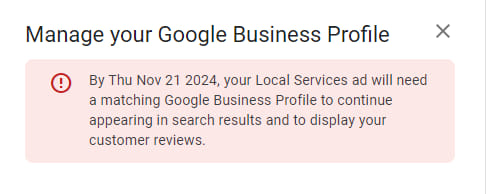
Understanding the Shift: Are GBP Reviews Replacing LSA Reviews?
BlogGoogle has fully consolidated LSA customer reviews into Google Business Profiles (GBP). The separate LSA review system was officially retired on July 11, 2025. Since that date, all reviews for businesses using Local Services Ads are managed exclusively through GBP. The old LSA review link no longer works, and existing LSA reviews have been migrated (or removed) after passing through GBP moderation policies. This change means your GBP rating, review count, and review recency now directly determine your LSA ad rank, visibility, and lead volume. A well-optimized GBP is no longer optional — it is the engine that powers your Local Services Ads performance. What Actually Happened: The Timeline Date Event November 2024 A linked, verified GBP becomes mandatory to run LSAs July 11, 2025 LSA reviews fully managed by GBP; separate LSA review system ends Early 2025 Existing LSA reviews begin transitioning to GBP October 20, 2025 Google Guaranteed and Google Screened badges retire; single “Google Verified” blue checkmark launches January 2026 Google increases algorithmic weight on review recency and velocity February 2026 Minimum review requirement for LSA activation removed; businesses can launch LSAs with zero reviews Why Google Made This Change The old dual-review system created confusion and abuse: Fragmented Trust Signals: Customers saw one set of reviews on LSAs and another on GBP, with no way to reconcile them. Review Spam: Some advertisers purchased fake LSA reviews in bulk to manipulate ad rank. Low LSA Review Volume: Very few customers left reviews directly through the LSA platform, making LSA-only reviews a weak trust signal. By consolidating everything under GBP, Google: Applies its established Maps review policies (which are stricter and better enforced). Creates one authoritative reputation score per business. Simplifies review management for business owners. What This Means for Your Business Your GBP Rating Is Your LSA Rating The star rating and review count displayed on your Local Services Ads are now pulled directly from your GBP. There is no separate LSA rating anymore. Reviews Are No Longer Required to Launch — But Still Required to Win Google removed the minimum review requirement for LSA activation in February 2026. A brand-new business can launch LSAs with zero reviews. However: Review count, rating, and recency remain dominant LSA ranking signals. A business with zero reviews will struggle to appear in the top LSA carousel against competitors with strong GBP profiles. Review velocity — the rate at which you receive fresh reviews — has increased in algorithmic weight since January 2026. The Google Verified Badge Replaced Google Guaranteed As of October 20, 2025, the green “Google Guaranteed” and “Google Screened” badges were retired. One unified blue “Google Verified” checkmark now appears on all eligible LSAs. This badge confirms verified licensing, insurance, and background checks — but it does not include the former $2,000 money-back guarantee. Action Plan: What You Must Do Now 1. Audit and Fully Optimize Your Google Business Profile A suspended, incomplete, or unverified GBP will prevent your LSA ads from running entirely. Immediate Optimization Checklist: Verify your GBP is claimed, verified, and publicly visible Complete every profile field: business description, services, hours, service areas, attributes Upload high-quality, real job photos weekly (not stock images) Ensure Name, Address, and Phone number (NAP) match across all online listings Confirm your GBP review link is correctly set in your LSA dashboard Post weekly updates, offers, or events to signal activity to Google 2. Replace All Old LSA Review Links Stop using any legacy LSA-specific review links immediately — they no longer function. Generate your GBP review short link from the “Ask for reviews” section of your GBP dashboard. Update all customer touchpoints: website, email signatures, SMS templates, invoices, CRM software, and printed materials. 3. Train Your Team on the New Reality Every employee who interacts with customers must understand that GBP reviews now fuel LSA performance. Provide scripts for requesting reviews at the moment of service completion. Ensure phone handlers know the 30-second billing rule: any call lasting 30 seconds or longer is charged as a lead, regardless of outcome. LSA Ranking Factors in 2026: What Actually Matters Ranking Factor Impact Level Notes GBP star rating and review count Primary (highest impact) Pulled directly from your GBP; no separate LSA rating exists Review recency and velocity High — increased weight as of January 2026 Businesses with stale review profiles see sudden lead volume drops Lead responsiveness (missed calls tracked over 90 days) High Answer every call; missed calls directly hurt your rank GBP profile completeness and accuracy High Audit quarterly; inconsistent NAP damages visibility Business hours accuracy Moderate Update seasonally; incorrect hours erode trust signals Budget and bid settings Moderate Higher budgets can improve placement, but cannot compensate for a poor GBP Proximity to searcher Moderate Still a factor, but strong reviews can help overcome distance disadvantages Unresolved customer complaints Negative impact Can pause or penalize your ads Expired license or insurance Negative impact Can remove your Google Verified badge How to Build a GBP Review Strategy That Scales Timing: Ask Immediately After Service Completion The highest conversion window is when the customer is satisfied and the interaction is fresh — ideally within 24 hours of service completion. Multi-Channel Outreach Methods In-person request at the conclusion of the job SMS message with a direct link to your GBP review form Personalized email including the review link Review link embedded in invoices, receipts, and follow-up communications Respond to Every Review — Positive and Negative Google recently refreshed its guidance: replies must be helpful, human, and aligned with policy. A strong response strategy improves how customers perceive your business in Search and Maps. Thank positive reviewers sincerely; avoid generic copy-paste responses. Address negative reviews constructively — acknowledge the issue, offer a solution, and take the conversation offline when appropriate. Ethical Review Practices (Critical for 2026) Google has formalized stronger enforcement against fake and incentivized reviews, including profile restrictions and suspensions: Prohibited Practice Why It Matters Offering discounts, freebies, or gifts in exchange for reviews Violates Google policy; can trigger GBP suspension — which pauses your LSAs Review gating (selectively soliciting only happy