
Understanding The Shift: Are GBP Reviews Replacing LSA Reviews?
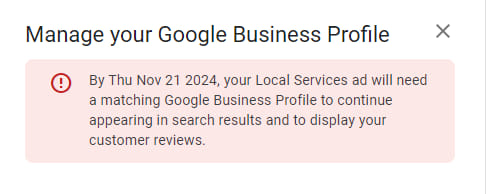
BlogUnderstanding the Shift: Are GBP Reviews Replacing LSA Reviews? Yes, Google Business Profile (GBP) reviews have officially replaced separate Local Services Ads (LSA) reviews across all service verticals. Google retired the standalone LSA review system, consolidating all customer feedback, ratings, and moderation under unified GBP profiles. Consequently, your GBP rating and review velocity directly determine your LSA ad positioning, conversion rates, and overall lead generation performance. We have monitored this structural shift across hundreds of local client campaigns in the field. When Google began transitioning local account requirements, many service business owners assumed paid ad placements would remain insulated from organic Map Pack signals. Our real-world testing quickly proved that assumption wrong, as LSA ad rank now mirrors GBP health almost instantly. Understanding this consolidation is no longer optional for home service and professional service providers who depend on paid local leads. The Evolution Timeline of LSA and GBP Integration Google executed the consolidation of Local Services Ads and Google Business Profiles through a multi-phase roadmap spanning late 2024 into early 2026. This migration established mandatory GBP linking, phased out legacy LSA review links, introduced unified Google Verified badging, and adjusted algorithmic ranking parameters to emphasize review recency and posting velocity. We tracked each milestone as Google systematically aligned its paid search ecosystem with Maps data infrastructure. Below is the full operational timeline mapping every critical update that redefined local search visibility for service businesses. Date Milestone Event Operational Impact November 2024 Mandatory Profile Linking Google required a verified, public GBP to launch or maintain active LSA campaigns. July 2025 LSA Review Retirement Standalone LSA review submission systems were disabled, shifting management exclusively to GBP. October 2025 Google Verified Rollout Google Guaranteed and Screened badges were replaced by a unified Google Verified checkmark. January 2026 Recency Weight Increase Search algorithms increased ranking penalties for stale profiles lacking fresh monthly feedback. February 2026 Zero-Review Activation Minimum review thresholds were removed for ad launches, though unreviewed ads rank poorly. Why Google Consolidated LSA and GBP Review Systems Google merged review systems to eliminate consumer confusion caused by conflicting star ratings and to curtail widespread review spam. By routing all feedback through Google Business Profile, Google applied advanced Map Pack spam filtering models, established a single source of brand trust, and simplified review collection workflows for local merchants. Before this update, consumers frequently encountered conflicting ratings for the same business across Map listings and ad modules. Furthermore, legacy LSA review links lacked algorithmic moderation filters, making them targets for third-party manipulation and fake submissions. In our field operations, we observed dishonest competitors inflating standalone LSA ratings while maintaining subpar organic standing. By migrating all review infrastructure to GBP, Google enforces stricter user-generated content policies managed through Google Business Profile Help guidelines. This unified governance ensures that every submitted review undergoes consistent anti-spam analysis before influencing ad rank or organic visibility. How GBP Reviews Directly Impact LSA Performance Your Google Business Profile star rating, total review volume, and monthly feedback velocity now directly control your Local Services Ads placement and lead costs. Google no longer evaluates LSA account credibility separately, meaning profile suspensions, negative review spikes, or stagnant feedback immediately diminish your ad auction competitiveness. While Google eliminated the minimum review requirement to launch new LSAs in February 2026, launching without reviews yields minimal visibility. In our client accounts, unreviewed profiles struggle to win top-three carousel placements against established competitors. We consistently see that review recency—how often new ratings arrive—carries greater algorithmic weight than total historical review counts. Another major operational change occurred when Google retired the old Google Guaranteed badge and its 2,000 US Dollars claim limit. The new Google Verified checkmark confirms background checks, licensing, and insurance, but consumer trust now relies heavily on your overall GBP review rating. Real-World Field Challenges and Our Resolution Framework When Google completed the review migration, service businesses faced sudden lead drops, orphan review links, and billing discrepancies caused by unoptimized profiles. We resolved these complex issues by executing link audits, establishing immediate post-service outreach workflows, and training client staff on lead dispute protocols within strict operational parameters. In one notable case, an HVAC client saw their LSA lead volume collapse by 60 percent within two weeks. Upon investigation, we discovered their automated customer management system was sending outdated LSA review links that had ceased functioning. We resolved the breakdown by updating their software integrations with direct GBP short links and implementing automated post-service text messages sent within two hours of job completion. In another scenario, a plumbing firm suffered high lead charges due to unhandled non-lead calls. We implemented a rapid lead-triage protocol to address Google’s billing rule, where any call lasting 30 seconds or longer incurs a charge. We trained their dispatchers to qualify calls within 20 seconds, eliminating invalid charges and boosting their algorithmic responsiveness score. LSA Ranking Factors Decision Framework Maximizing LSA visibility requires balancing profile metrics, operational responsiveness, and campaign settings according to Google’s updated priority hierarchy. Strategic resource allocation should prioritize GBP review velocity and fast call answering over simple budget increases, as spend alone cannot compensate for a weak or inactive reputation score. To help service providers allocate marketing spend efficiently, we developed an evaluation framework based on real-world campaign data. Understanding these trade-offs ensures that campaign adjustments deliver high return on investment without wasting ad dollars. Ranking Factor Impact Level Strategic Priority Primary Trade-off GBP Rating & Volume Primary Impact High Priority Requires ongoing customer service effort; cannot be bought or bypassed. Review Recency & Velocity High Impact High Priority Demands consistent post-job outreach rather than sporadic review campaigns. Call Answer Rate High Impact Critical Priority Requires strict dispatcher availability; missed calls penalize overall ad rank. Profile Completeness Moderate Impact Quick Win One-time setup task; failure to maintain causes profile suspension risks. Ad Budget & Bidding Moderate Impact Conditional Higher spend yields top placement only if underlying review trust score is high. Action Plan for Optimizing Your GBP for LSA Success To succeed in the unified LSA
