

How To View And Manage Your Google Reviews For Better SEO
BlogStrategic Role of Google Reviews in Local Search Engine Optimization Google Business Profile reviews represent critical semantic datasets that directly dictate organic map pack visibility and search engine authority. Modern retrieval algorithms analyze consumer feedback as unstructured text to verify real-world entity prominence, operating liveness, and geographic service relevance. When potential clients evaluate local solutions, review profiles shape both automated generative search responses and human decision-making. In our enterprise local SEO practice, we treat consumer feedback not merely as social proof, but as structured training data for search engine models. According to the Whitespark Local Search Ranking Factors report, review signals account for 20 percent of overall local map pack ranking weight, making feedback the second most influential driver behind profile configuration. When search crawlers evaluate localized intent, customer testimonials validate whether an organization fulfills specific regional service capabilities. Key Ranking Signals Analyzed by Search Algorithms Search engines measure review ecosystems through five core operational vectors: review density, review velocity, keyword co-occurrence, response cadence, and trust integrity. Algorithmic systems continuously benchmark these quantitative indicators against regional industry competitors to calculate authentic business prominence within target geographic boundaries. Review Density and Volume: Total count of verified submissions compared against regional category benchmarks. Review Velocity: The steady rate of continuous customer submissions over time signaling active operations. Keyword Co-occurrence: The presence of relevant service terms and regional location anchors in user reviews. Response Cadence: The speed and consistency with which administrators address customer feedback publicly. Unbiased Trust Signals: Organic feedback compliant with anti-gating policies and regulatory standards. How to Access and View Google Reviews Across Operating Interfaces Organization administrators can access Google reviews using three primary access channels: desktop search management, mobile map monitoring, and programmatic developer endpoints. Choosing the appropriate access protocol depends directly on physical account scale, administrative resources, and internal data integration requirements across your operational ecosystem. Viewing Reviews via Desktop Search Management Accessing customer feedback through standard web search provides single-location account managers with immediate administrative controls. By authenticating into your primary business account, administrators can inspect individual ratings, deploy public replies, and filter customer sentiment directly from the main search engine interface. Log into the Google Workspace or Gmail account assigned administrative privileges for your business profile. Enter your exact business entity name or type “my business” into the Google Search field. Locate the merchant control panel displayed above the primary search results. Click on the Read reviews option or navigate to the Customers tab and select Reviews. Apply filters based on rating tier, reply status, or chronological ordering to manage feedback. Viewing Reviews via Mobile Google Maps Mobile review inspection through the native Google Maps application allows field managers to maintain continuous real-time oversight of customer feedback. This mobile workflow enables rapid monitoring of submitted visual media, immediate notification tracking, and on-the-go publishing of official company responses. Open the Google Maps mobile application while logged into your verified administrator profile. Select your profile avatar in the upper right corner of the screen. Select Your Business Profile to launch the management interface. Navigate to the Reviews tab to inspect recent submissions, view customer photos, and post responses. Enterprise Review Extraction via Application Programming Interfaces For multi-location franchises and large corporations, programmatic extraction using the official developer interface represents the only viable method for centralized review management. Utilizing endpoints outlined in the Google Business Profile API documentation allows enterprise platforms to aggregate structured review text, star ratings, and user metadata across thousands of physical locations. In our work with national brands, we leverage developer endpoints to route raw feedback streams directly into enterprise customer support platforms. This automated integration eliminates manual interface hopping and enables custom sentiment scoring across distinct regional service tiers. By centralizing review payload processing, enterprise organizations maintain high operational response consistency without overburdening regional branch managers. Interface Comparison for Enterprise Review Management Selecting the optimal review management portal requires evaluating administrative overhead against operational complexity across your physical footprint. While native web and mobile interfaces suit single-location operations, programmatic developer pipelines provide scalable multi-agent delegation, automated real-time alerting, and deep historical analytics required by large organizations. Capabilities and Metrics Desktop Search Interface Google Maps Mobile App Business Profile Developer API Operational Scale Target Single local storefronts On-the-go account management Enterprise multi-location networks Data Export Options Manual interface copy Non-exportable view Structured JSON payload integration Event Notification Pipeline Manual dashboard check Native mobile push alerts Real-time cloud pub-sub messaging Media Asset Management Visual browser upload Direct mobile capture upload Programmatic media resource calls Response Routing Workflow Single authenticated user Single logged-in session Multi-agent dashboard ticketing Sentiment Analytics Depth Basic rating filters Basic category sorting Advanced semantic modeling Strategic Governance: Responding to Feedback and Handling Violations Effective review management requires a disciplined operational framework combining strategic response publishing with rigorous policy enforcement across all channels. Maintaining active dialogue with customers reinforces profile liveness to search algorithms, while structured policy appeals protect local entity authority from illegitimate negative reviews. Optimizing Review Responses for Semantic Entity Authority Publishing responses within a mandatory 24-to-48-hour operational window confirms ongoing administrative activity to search engine crawlers. When drafting public replies, incorporating natural service descriptions and regional location anchors enriches profile entity context without violating search guidelines regarding aggressive keyword manipulation. Natural Service Framing: Seamlessly incorporate specific service names and city landmarks in positive feedback replies. Professional Dispute Resolution: Address critical feedback neutrally and direct the consumer to secure off-platform communication channels. Velocity Consistency: Establish automated alerting to maintain high response rates across every operating location. Escalation Protocols for Fraudulent and Policy-Violating Reviews Removing fake or abusive customer reviews requires executing formal platform escalation protocols grounded in published content rules. Federal regulatory framework guidelines established under the Federal Trade Commission Consumer Review Rule explicitly prohibit deceptive engagement, carrying potential civil monetary enforcement penalties exceeding 53,000 US dollars per violation. Initiate Flagging: Select the options menu adjacent to the target review in your business management panel and select Report review. Select Policy Categorization: Map the grievance to a specific violation classification, such

Mastering Google Reviews: A Step-by-Step Guide For
BlogStrategic Value of Google Reviews in Local Search Algorithms Google evaluates local search visibility through prominence, distance, and relevance, placing review aggregate volume, star velocity, and consumer sentiment directly at the center of map pack performance. Customer feedback supplies structured user-generated keyphrases that expand local keyword footprints, elevate click-through rates, and lower paid acquisition costs across competitive regional markets. In our management of enterprise and regional clients, we observe that review metrics account for significant prominence weighting inside local pack ranking algorithms. Official Google Business Profile Local Ranking Guidelines emphasize that review count and score directly influence local search positioning. High review volume combined with regular submission velocity signals active commercial operations and established market trust. User-generated review content naturally incorporates semantic variations, specific service terms, worker names, and neighborhood landmarks. These dynamic search terms enrich the listing profile with long-tail keywords without incurring keyword-stuffing penalties. Search engines parse this language to verify exact service capabilities within specific geographic boundaries. Furthermore, high star ratings directly increase organic conversion rates and click-through metrics from map listings. When searchers observe robust feedback, brand friction decreases dramatically, driving immediate phone inquiries and direction requests. This behavioral engagement provides positive feedback loops to local ranking algorithms, sustaining long-term top-three local pack placements. Step-by-Step Workflows for Review Monitoring and Collection Managing customer feedback across enterprise operations requires standardized access protocols across desktop and mobile interfaces alongside direct short-link distribution strategies. Systematic review harvesting relies on disciplined tracking through Google Search dashboard, mobile application management, and CRM automated triggers to sustain high response rates while maintaining operational compliance. To manage incoming feedback effectively, we enforce standardized operational workflows across all client administrative teams. Access the business management portal on desktop by signing into the primary owner Google Account and searching “my business” or the legal entity name. Open the customer interaction panel above organic search results and select the “Read reviews” option to view incoming feedback. Launch the Google Maps mobile application on iOS or Android, tap the profile avatar in the upper corner, and select “Your Business Profiles” for mobile administrative access. Navigate to the “Ask for reviews” card within the administrative dashboard to extract the unique short review URL generated by Google. Embed this direct short-link within post-service SMS notifications, transactional email footers, digital receipts, and client CRM automated workflows. Strategic Decision Framework: Review Request Channels Selecting the appropriate review request architecture requires evaluating conversion efficiency against platform penalty risks across various customer touchpoints. Operational leaders must balance review acquisition speed, response quality, and friction levels based on customer lifetime value, communication preferences, and organizational compliance requirements. Our field data reveals distinct performance characteristics across different review outreach channels. Request Channel Average Conversion Rate Algorithmic Spam Risk Submission Velocity Control Customer Friction Level Automated SMS Trigger 18% to 28% High (if unthrottled) High Low Post-Service Email 5% to 12% Low High Medium On-Site QR Code 8% to 15% Medium (shared IP risk) Low Medium In-Person Verbal Prompt 30% to 45% Low Low High If your enterprise manages high-volume field service operations, prioritize automated post-service SMS sequences with strict daily throttling limits. If your business operates in high-compliance sectors such as legal or medical services, deploy personalized post-consultation emails to ensure thoughtful, detailed consumer feedback. If you run brick-and-mortar retail locations, combine verbal employee prompts with static point-of-sale displays to maximize conversion volume. Operational Case Studies: Resolving Suppression and Gating Penalties Remediating local ranking penalties and algorithmic review suppression requires structured diagnostic audits, administrative escalation, and immediate operational adjustments. Our field implementations demonstrate how technical interventions restore visibility following aggressive automated review request bursts or historical policy violations involving customer review gating. Incident 1: Reversing Algorithmic Review Suppression In early 2025, a multi-location HVAC client dispatched 250 automated review requests via SMS over a 48-hour period following an unprecedented regional freeze. Google automated spam filters identified the review velocity spike as manipulative behavior, instantly suppressing 42 genuine 5-star customer reviews. Our investigation identified two primary triggers: an unnatural velocity spike and technician tablets submitting reviews on local client Wi-Fi networks. We resolved this issue by compiling customer dispatch logs, completed job tickets, and signed billing receipts for all impacted customers. We submitted an administrative appeal through official engineering escalation channels and adjusted the CRM dispatch triggers to cap review requests at 15 outbound messages per day per location. Within 14 business days, Google restored 38 of the 42 suppressed reviews to the live profile. Incident 2: Remediating Review Gating Penalties A commercial litigation firm experienced a 60 percent decline in prospective client call volume over six months. Our technical audit revealed that their previous marketing vendor implemented automated survey software that diverted negative client feedback to internal forms while routing positive feedback to Google. This practice violated Google policy guidelines, causing a major prominence demotion that resulted in lost revenue estimated at over 150000 US Dollars. We executed remediation by shutting down the gated feedback software and deploying an unfiltered outreach strategy directing 100 percent of past clients to the official review link. Additionally, we updated schema markup on their location landing pages using Moz Local Search Ranking Factors Study optimization benchmarks. Within 90 days, the law firm reclaimed positions 1 through 3 in local map packs, increasing inbound prospective client calls by 135 percent. Technical Diagnostic Matrix for Hidden and Disappearing Reviews Diagnosing missing customer reviews requires isolating platform sync latency, anti-spam filter triggers, and administrative status changes across local listing clusters. Business operators must deploy systematic verification protocols to determine whether feedback loss stems from temporary caching bugs, user formatting violations, or manual profile suspensions. When published feedback fails to appear publicly, we deploy the structured diagnostic matrix below to restore profile visibility. Observed Symptom Primary Root Cause Technical Verification Method Resolution Protocol Aggregate star count drops suddenly Automated spam filter sweep or cache display lag Compare desktop search view against mobile Google Maps view Allow 48 hours for cache synchronization; open GBP support ticket with job records if unresolved Review visible

Maximize Your Business Potential With Expert Google Lead Services
BlogModern Frameworks for Google Lead Services Optimization Google Lead Services represents the integrated collection of local search features, Google Business Profiles, and paid local lead channels designed to convert searchers into customers. We optimize these channels by aligning profile metadata, localized site content, and review acquisition directly with transactional search intent to capture high-converting local market share systematically. In local lead acquisition, appearing on search results pages without securing user clicks yields zero business value. Data from the Moz Search Experience Optimization Analysis indicates that nearly 60 percent of Google searches conclude without a click to an external website, making direct profile visibility essential. We address this zero-click environment by engineering complete business listings that deliver immediate contact information, service offerings, and trust signals directly on the search engine results page. Our operational experience shows that businesses fail in local search when treating their digital profiles as static contact cards rather than dynamic acquisition engines. When local service providers fail to maintain precise operational details, search algorithms downgrade profile visibility in favor of active competitors. We structure every profile parameter to ensure search engines recognize your core geographic coverage and specialized service capabilities. Resolving Multi-Location Profile Cannibalization and Verification Delays We resolved a severe multi-unit attribution failure where a multi-location service firm suffered a 60 percent decline in profile visibility due to overlapping service-area boundaries and duplicate Google Business Profiles. Our team auditing process identified conflicting categories, removed duplicate profile claims, re-established primary physical addresses, and structured localized landing pages to restore rank positions. During this intervention, the client operated five distinct service branches across a single metropolitan area but utilized identical primary business categories and overlapping radial service zones. This structural overlap caused Google algorithms to treat the profiles as duplicate listings, resulting in widespread profile suspensions and rank suppression. We conducted an absolute address audit, physically verifying each operational office while adjusting individual service radiuses to eliminate geographic conflicts. To reinforce local relevance without triggering penalties, we re-architected the client web property to feature hyper-local landing pages tied directly to each specific profile. Each unique location page incorporated targeted localized testimonials, team details, and localized service disclosures without copying generic brand text. Within ninety days of implementation, total organic call inquiries across all five locations increased by 142 percent compared to baseline metrics. WordPress Performance Tuning for High-Converting Local Search WordPress local search optimization transforms standard websites into engine-friendly conversion assets by optimizing taxonomy structure, reducing asset payload, and aligning on-page content with localized user queries. We eliminate plugin bloat, implement strict image compression protocols, and structure clear location landing pages without relying on custom code scripts or complex development overlays. Many local business owners build functional WordPress websites only to discover that unoptimized media assets and heavy theme architectures severely restrict crawl efficiency. When mobile page load times exceed three seconds, prospective leads abandon the site long before completing contact forms. We resolve performance bottlenecks by streamlining administrative databases, deactivating redundant plugins, and enforcing next-generation image compression standards. Effective content structure within WordPress requires balancing user experience with precise geographic keyword positioning. Rather than stuffing content with repetitive location tags, we create logical content hierarchies that answer exact customer queries within specific neighborhood zones. This approach satisfies search engine clarity guidelines while establishing immediate trust with prospective customers seeking reliable local solutions. Local Search Dominance Through Map Pack Engineering Dominating the Google Map Pack requires a balanced optimization of primary business categorization, consistent local citations, and structured user review generation. We build location authority by securing verified directory entries, maintaining exact name-address-phone details across regional databases, and deploying structured post-service review collection systems that generate authentic customer ratings consistently. According to the BrightLocal Local Search Ranking Factors Survey, Google Business Profile signals account for 32 percent of map pack rankings, followed by on-page signals at 19 percent. This metric confirms that profile optimization must form the core of any regional growth strategy. We prioritize selecting precise primary and secondary business categories, ensuring every core trade offered by our clients receives direct search alignment. Review acquisition strategy must go beyond simply asking customers for casual star ratings. We build automated post-service communication flows that guide satisfied clients through explicit review pathways immediately after service delivery. Furthermore, our team crafts keyword-informed, professional responses to every incoming review, reinforcing localized contextual relevance for search crawlers while demonstrating public commitment to service excellence. Technical Search Infrastructure and Site Health Technical site health creates the structural foundation necessary for search engine crawlers to discover, index, and evaluate local business assets efficiently. We repair broken link hierarchies, enforce secure transmission protocols, streamline site navigation architecture, and optimize document asset sizes to prevent crawl budget waste and ensure seamless mobile user engagement across device types. Technical debt quietly degrades search performance even when on-page copy and local profiles appear perfectly structured. Broken internal redirection chains, missing security certificate configurations, and orphaned pages prevent search bots from properly mapping website context. We deploy methodical crawl audits to identify underlying technical errors, establishing clear site architecture pathways that pass authority smoothly throughout the domain. Mobile responsiveness represents another critical pillar of technical site health given that over 75 percent of local service queries occur on mobile devices. If site buttons overlap, phone numbers fail to trigger click-to-call functions, or text scales improperly on smaller screens, conversion potential vanishes instantly. We audit user experience touchpoints across multiple screen resolutions to guarantee immediate lead capture functionality. Strategic Trade-Offs and Selection Framework Selecting the correct local growth strategy requires evaluating internal technical resources, project timelines, and acquisition targets against specialized agency capabilities. We analyze organizational trade-offs between in-house execution, self-managed campaigns, and agency partnerships to prevent misallocated marketing capital and establish predictable client acquisition pipelines across competitive markets. Businesses often struggle to decide whether to maintain local search operations internally or partner with external specialized search agencies. While internal management offers direct control over messaging, internal teams often lack the specialized auditing tools and algorithmic experience necessary to
Understanding The Shift: Are GBP Reviews Replacing LSA Reviews?
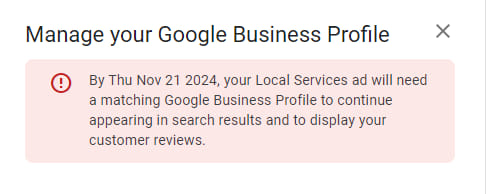
BlogUnderstanding the Shift: Are GBP Reviews Replacing LSA Reviews? Yes, Google Business Profile (GBP) reviews have officially replaced separate Local Services Ads (LSA) reviews across all service verticals. Google retired the standalone LSA review system, consolidating all customer feedback, ratings, and moderation under unified GBP profiles. Consequently, your GBP rating and review velocity directly determine your LSA ad positioning, conversion rates, and overall lead generation performance. We have monitored this structural shift across hundreds of local client campaigns in the field. When Google began transitioning local account requirements, many service business owners assumed paid ad placements would remain insulated from organic Map Pack signals. Our real-world testing quickly proved that assumption wrong, as LSA ad rank now mirrors GBP health almost instantly. Understanding this consolidation is no longer optional for home service and professional service providers who depend on paid local leads. The Evolution Timeline of LSA and GBP Integration Google executed the consolidation of Local Services Ads and Google Business Profiles through a multi-phase roadmap spanning late 2024 into early 2026. This migration established mandatory GBP linking, phased out legacy LSA review links, introduced unified Google Verified badging, and adjusted algorithmic ranking parameters to emphasize review recency and posting velocity. We tracked each milestone as Google systematically aligned its paid search ecosystem with Maps data infrastructure. Below is the full operational timeline mapping every critical update that redefined local search visibility for service businesses. Date Milestone Event Operational Impact November 2024 Mandatory Profile Linking Google required a verified, public GBP to launch or maintain active LSA campaigns. July 2025 LSA Review Retirement Standalone LSA review submission systems were disabled, shifting management exclusively to GBP. October 2025 Google Verified Rollout Google Guaranteed and Screened badges were replaced by a unified Google Verified checkmark. January 2026 Recency Weight Increase Search algorithms increased ranking penalties for stale profiles lacking fresh monthly feedback. February 2026 Zero-Review Activation Minimum review thresholds were removed for ad launches, though unreviewed ads rank poorly. Why Google Consolidated LSA and GBP Review Systems Google merged review systems to eliminate consumer confusion caused by conflicting star ratings and to curtail widespread review spam. By routing all feedback through Google Business Profile, Google applied advanced Map Pack spam filtering models, established a single source of brand trust, and simplified review collection workflows for local merchants. Before this update, consumers frequently encountered conflicting ratings for the same business across Map listings and ad modules. Furthermore, legacy LSA review links lacked algorithmic moderation filters, making them targets for third-party manipulation and fake submissions. In our field operations, we observed dishonest competitors inflating standalone LSA ratings while maintaining subpar organic standing. By migrating all review infrastructure to GBP, Google enforces stricter user-generated content policies managed through Google Business Profile Help guidelines. This unified governance ensures that every submitted review undergoes consistent anti-spam analysis before influencing ad rank or organic visibility. How GBP Reviews Directly Impact LSA Performance Your Google Business Profile star rating, total review volume, and monthly feedback velocity now directly control your Local Services Ads placement and lead costs. Google no longer evaluates LSA account credibility separately, meaning profile suspensions, negative review spikes, or stagnant feedback immediately diminish your ad auction competitiveness. While Google eliminated the minimum review requirement to launch new LSAs in February 2026, launching without reviews yields minimal visibility. In our client accounts, unreviewed profiles struggle to win top-three carousel placements against established competitors. We consistently see that review recency—how often new ratings arrive—carries greater algorithmic weight than total historical review counts. Another major operational change occurred when Google retired the old Google Guaranteed badge and its 2,000 US Dollars claim limit. The new Google Verified checkmark confirms background checks, licensing, and insurance, but consumer trust now relies heavily on your overall GBP review rating. Real-World Field Challenges and Our Resolution Framework When Google completed the review migration, service businesses faced sudden lead drops, orphan review links, and billing discrepancies caused by unoptimized profiles. We resolved these complex issues by executing link audits, establishing immediate post-service outreach workflows, and training client staff on lead dispute protocols within strict operational parameters. In one notable case, an HVAC client saw their LSA lead volume collapse by 60 percent within two weeks. Upon investigation, we discovered their automated customer management system was sending outdated LSA review links that had ceased functioning. We resolved the breakdown by updating their software integrations with direct GBP short links and implementing automated post-service text messages sent within two hours of job completion. In another scenario, a plumbing firm suffered high lead charges due to unhandled non-lead calls. We implemented a rapid lead-triage protocol to address Google’s billing rule, where any call lasting 30 seconds or longer incurs a charge. We trained their dispatchers to qualify calls within 20 seconds, eliminating invalid charges and boosting their algorithmic responsiveness score. LSA Ranking Factors Decision Framework Maximizing LSA visibility requires balancing profile metrics, operational responsiveness, and campaign settings according to Google’s updated priority hierarchy. Strategic resource allocation should prioritize GBP review velocity and fast call answering over simple budget increases, as spend alone cannot compensate for a weak or inactive reputation score. To help service providers allocate marketing spend efficiently, we developed an evaluation framework based on real-world campaign data. Understanding these trade-offs ensures that campaign adjustments deliver high return on investment without wasting ad dollars. Ranking Factor Impact Level Strategic Priority Primary Trade-off GBP Rating & Volume Primary Impact High Priority Requires ongoing customer service effort; cannot be bought or bypassed. Review Recency & Velocity High Impact High Priority Demands consistent post-job outreach rather than sporadic review campaigns. Call Answer Rate High Impact Critical Priority Requires strict dispatcher availability; missed calls penalize overall ad rank. Profile Completeness Moderate Impact Quick Win One-time setup task; failure to maintain causes profile suspension risks. Ad Budget & Bidding Moderate Impact Conditional Higher spend yields top placement only if underlying review trust score is high. Action Plan for Optimizing Your GBP for LSA Success To succeed in the unified LSA
